


How Do Ferries Work in Norway?

If you're planning a road trip through Norway, chances are you'll use a ferry at some point.
For many first-time visitors, ferries can feel confusing.
Questions like these are common:
Do I need to book ferries in advance?
How do I pay?
Are ferries expensive?
Can campervans use ferries?
What happens when I arrive at the terminal?
The good news is that Norwegian ferries are much easier to use than most travelers expect.
In fact, ferries are such an important part of Norway's transportation system that locals use them almost like regular roads.
For road trip travelers, ferries quickly become a normal part of the journey.
This guide explains everything you need to know about using ferries in Norway, especially if you're traveling by campervan.
Why Are Ferries So Common in Norway?
Norway's geography is unique.
The country is filled with:
Fjords
Islands
Coastal Regions
Mountain Landscapes
Building roads around every fjord would often require extremely long detours.
Instead, ferries connect many routes directly across the water.
This allows travelers to:
Save Driving Time
Reach Remote Destinations
Access Islands
Travel Efficiently Through Fjord Regions
Without ferries, many popular Norway road trip routes would take much longer.
Do You Need to Book Ferries in Advance?
For most road trip ferries, the answer is no.
This surprises many tourists.
Most local ferry routes operate on a simple system:
You drive to the terminal, wait in line, and board when the ferry arrives.
There is usually:
No complicated booking process
No printed ticket requirements
No special check-in
You simply follow the traffic flow.
For most campervan travelers, the process feels surprisingly easy.
However, there are exceptions.
Some longer routes and special tourist ferries may require advance reservations, especially during peak travel periods.
Always check specific routes if you're traveling during summer.
What Happens When You Arrive at a Ferry Terminal?
The process is straightforward.
Step 1
Join the vehicle queue.
Step 2
Wait for boarding instructions.
Step 3
Drive onto the ferry when directed by staff.
Step 4
Park your vehicle.
Step 5
Enjoy the crossing.
Most terminals are clearly marked and easy to understand.
Even first-time visitors rarely have problems.
How Do You Pay for Ferries?
This is one of the most common questions.
Many Norwegian ferries use automatic payment systems.
In many cases:
Cameras record vehicle information
Charges are processed automatically
Rental companies handle billing
For campervan rentals, ferry fees are often added later through the rental provider.
Some ferries still offer direct payment options.
Payment methods may include:
Credit Cards
Debit Cards
Electronic Payment Systems
Cash is becoming increasingly uncommon.
Before traveling, it's worth asking your campervan rental company how ferry charges are handled.
Are Ferries Expensive?
It depends on:
Route Length
Vehicle Size
Passenger Numbers
Short ferry crossings are usually affordable.
Longer routes naturally cost more.
For campervan travelers, prices are often based on:
Vehicle Length
Number of Passengers
Many visitors initially worry about ferry costs.
In reality, ferries are simply another travel expense similar to:
Fuel
Toll Roads
Parking
The key is including them in your budget before the trip begins.
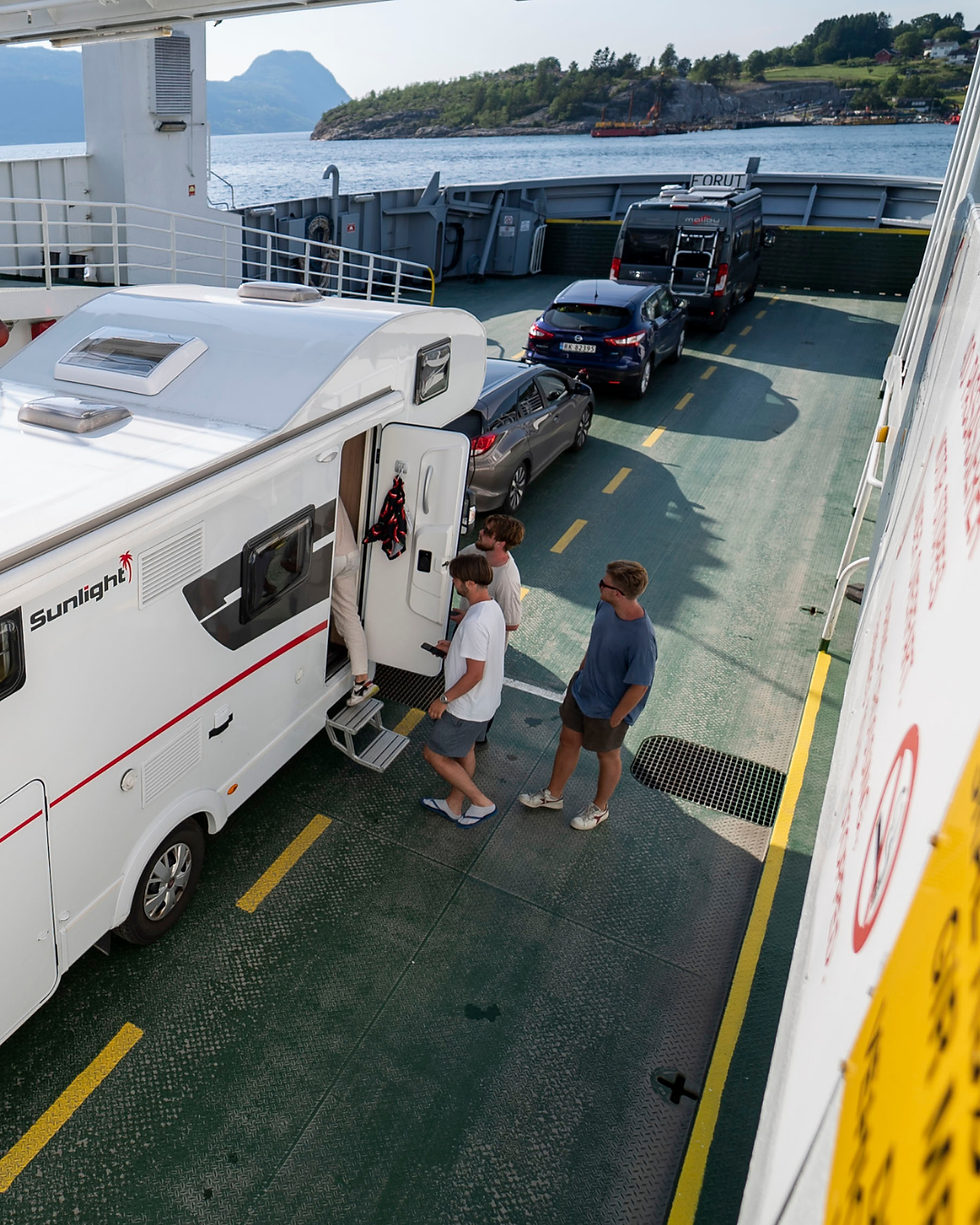
Can Campervans Use Norwegian Ferries?
Absolutely.
Norwegian ferries are designed to accommodate:
Cars
Motorcycles
Campervans
Motorhomes
Buses
Commercial Vehicles
Thousands of campervans use ferries throughout Norway every year.
Staff are experienced in loading larger vehicles and will direct you where to park.
For most travelers, ferry crossings quickly become routine.
How Long Are Ferry Crossings?
Crossing times vary significantly.
Some ferries take:
10 Minutes
15 Minutes
20 Minutes
Others may last:
30 Minutes
45 Minutes
Over an Hour
The route determines the crossing time.
One of the best things about Norway ferries is that they often provide beautiful scenery during the journey.
Instead of feeling like transportation, many crossings become memorable experiences themselves.
Ferries Can Actually Improve Your Road Trip
Many travelers worry ferries will slow them down.
The opposite often happens.
Ferry crossings provide opportunities to:
Relax
Take Photographs
Enjoy Fjord Views
Eat Snacks
Stretch Your Legs
Rest From Driving
After several hours on the road, these short breaks often feel welcome.
Many travelers later describe ferry rides as some of their favorite moments of the trip.
Summer Travel Requires Extra Planning
Norway's busiest travel season is summer.
During:
June
July
August
Popular ferry routes can become busy.
This may lead to:
Waiting Times
Longer Queues
Occasional Delays
If you're traveling during peak season:
Arrive Early
Remain Flexible
Avoid Rushing Between Destinations
Most experienced Norway travelers build extra time into their itinerary specifically for ferries.
Weather Can Affect Ferry Operations
Norway's coastal weather can change quickly.
Although ferries operate reliably throughout the year, severe weather may occasionally affect:
Schedules
Departure Times
Crossings
This is more common during:
Autumn Storms
Winter Weather
Rough Sea Conditions
Travelers should always check route information if weather conditions look severe.
Fortunately, major disruptions are relatively uncommon.
Some of Norway's Most Scenic Routes Include Ferries
Many famous road trips naturally include ferry crossings.
Popular regions include:
Western Norway
Geiranger Area
Fjord Norway
Atlantic Coastal Routes
Northern Norway
In many cases, ferries actually improve the scenic experience.
The combination of:
Mountains
Waterfalls
Fjords
Coastal Landscapes
Creates incredible views from the ferry deck.
For photographers, these crossings often provide unique perspectives unavailable from the road.
What Should Campervan Travelers Know?
For campervan travelers, ferries are usually very easy.
A few simple tips help:
Arrive With Enough Time
Follow Staff Instructions
Check Vehicle Length Requirements if Necessary
Carry a Payment Card
Stay Flexible During Summer Travel
Enjoy the Crossing Rather Than Rushing
Many first-time visitors worry about ferry logistics.
After the first crossing, most realize how simple the process really is.
Are Ferries Better Than Driving Around Fjords?
In many cases, yes.
Without ferries, some routes would require extremely long detours.
Ferries often:
Save Time
Reduce Driving Distance
Provide Scenic Views
Make Travel Easier
They are one reason Norway road trips feel unique compared to many other European destinations.
So, How Do Ferries Work in Norway?
The answer is simple.
Most Norwegian ferries work like floating sections of the road network.
You:
Arrive at the Terminal
Join the Queue
Board When Directed
Enjoy the Crossing
Continue Your Journey
No complicated process.
No major stress.
For campervan travelers, ferries quickly become one of the most enjoyable parts of exploring Norway.
Rather than viewing them as interruptions, many travelers eventually see ferries as part of the adventure itself.
FAQ
Do I need to book ferries in Norway in advance?
Most local road trip ferries do not require advance booking. You simply arrive and board when space is available.
Can campervans use Norwegian ferries?
Yes. Norwegian ferries regularly transport campervans, motorhomes, cars, and other vehicles.
How do you pay for ferries in Norway?
Many ferries use automatic payment systems, while others accept card payments. Rental companies often process ferry charges for campervan travelers.
Are ferries expensive in Norway?
Costs vary depending on route length, vehicle size, and passenger numbers, but ferries are a normal part of road trip budgeting in Norway.
Do ferries run during winter?
Yes. Many ferry routes operate year-round, although severe weather can occasionally affect schedules.


Comments